
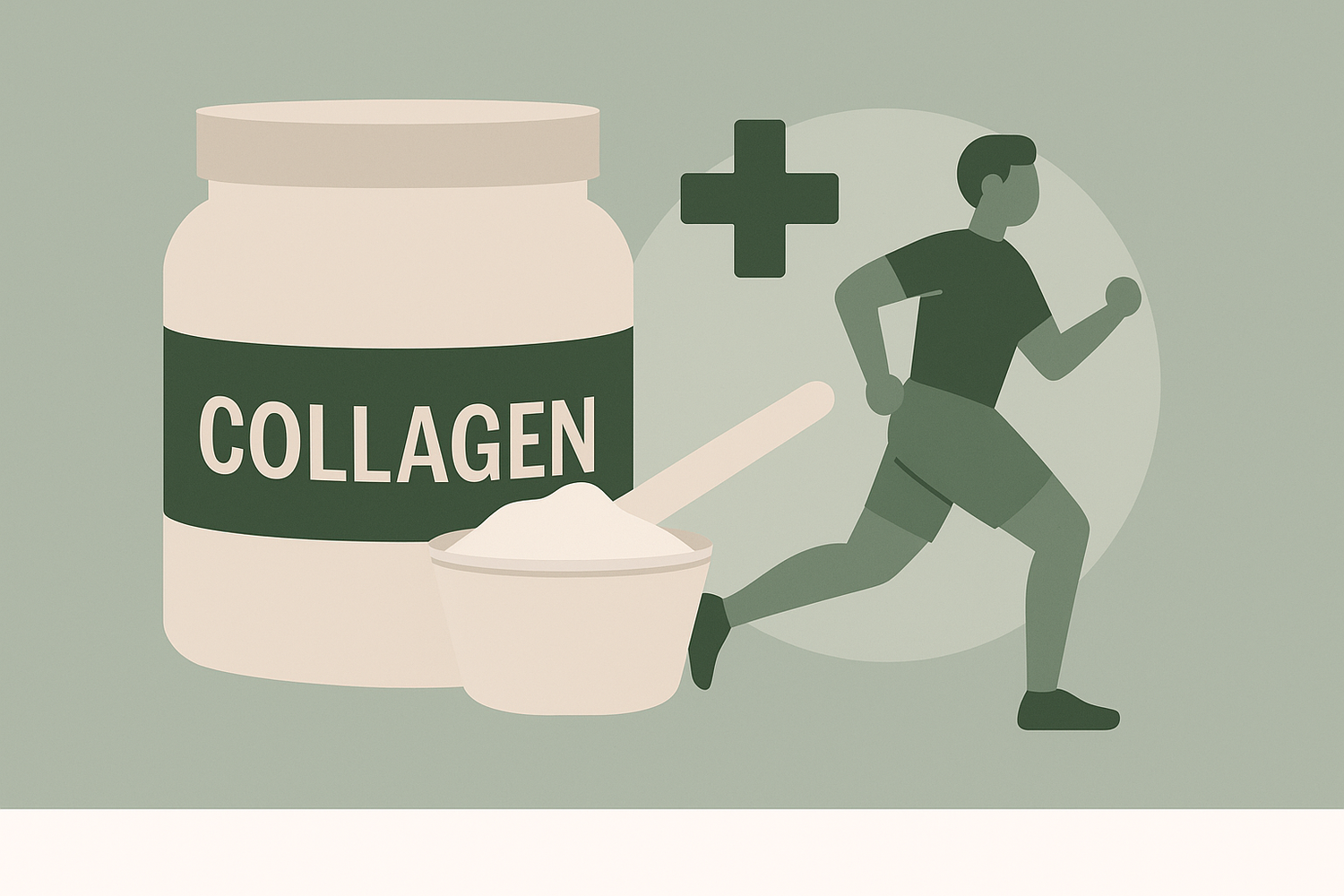
Athletic recovery is increasingly being understood at the microstructural level: not simply repairing muscle fibers, but restoring and strengthening connective tissues like tendons, ligaments, and cartilage.
Emerging evidence suggests that higher doses of collagen peptides—specifically those exceeding 20 grams daily—may significantly accelerate recovery processes, particularly in physically active males subjected to high mechanical loading.
Optimizing tissue health through targeted supplementation is becoming a non-negotiable pillar of modern performance strategies.
Why Connective Tissue Health Matters for Performance
Tendons and ligaments transmit forces between muscles and bones, directly influencing strength expression, power transfer, and injury resilience.
Repeated mechanical loading during strength training, sprinting, and plyometric activities places immense stress on these connective tissues.
Damage or degradation at this level, even when subclinical, leads to:
-
Decreased force production
-
Higher injury risk (particularly tendinopathies and ligament tears)
-
Longer recovery windows between sessions
-
Impaired athletic longevity
Supporting the repair and strengthening of connective tissue is therefore critical not only for short-term gains but also for sustaining peak performance over time.
Scientific Evidence: High-Dose Collagen for Tendon and Ligament Recovery
A pivotal study published in the American Journal of Clinical Nutrition examined the effects of high-dose (20g) collagen peptide supplementation combined with exercise in physically active young males.
The researchers found significant improvements in markers of tendon mechanical properties, including stiffness and load tolerance, compared to a placebo group (Shaw et al., 2017).
Key findings included:
-
Enhanced collagen fibril organization in response to loading
-
Faster recovery from exercise-induced microtrauma
-
Improved subjective ratings of joint stability and strength
-
Increased overall tissue resilience
These outcomes suggest that high-dose collagen supplementation amplifies the body's natural remodeling response to mechanical stress.
Mechanisms Behind Collagen’s Effects on Recovery
High-dose collagen supplementation enhances recovery through several critical pathways:
-
Amino Acid Provision:
Supplies high concentrations of glycine, proline, and hydroxyproline—essential for new collagen synthesis. -
Stimulation of Fibroblast Activity:
Collagen peptides act as signaling molecules, triggering fibroblasts to increase extracellular matrix production. -
Tendon and Ligament Thickening:
Supports adaptive remodeling, increasing tissue cross-sectional area and mechanical strength. -
Improved Blood Flow:
When paired with loading exercises, collagen supplementation improves vascularization of tendon tissues, enhancing nutrient delivery and waste clearance.
Together, these mechanisms result in faster, stronger recovery of tissues that are often the weak link in athletic performance chains.
Dosage: Why 20 Grams Matters
Most earlier collagen studies used lower doses (5–10g) with modest results.
However, more recent trials consistently demonstrate that 20g or more per day is necessary to elicit significant connective tissue remodeling and recovery benefits.
This dose aligns closely with the natural demands placed on athletes undergoing daily high-intensity loading protocols.
Furthermore, spreading collagen intake around mechanical loading sessions (i.e., 30–60 minutes prior to training) may further enhance the adaptive response.
How Les Fits In
Each can of Les delivers 20 grams of hydrolyzed collagen peptides—precisely the clinical dose shown to optimize tendon, ligament, and cartilage recovery in active male athletes.
By integrating this high-dose collagen strategy into a daily, functional beverage, Les removes the guesswork and inconsistency from connective tissue support protocols.
Combined with creatine HCl and real fruit phytonutrients, Les offers a comprehensive platform for accelerating recovery, enhancing performance, and extending athletic career longevity.
Key Takeaways
-
Connective tissue health is critical for sustained strength, speed, and resilience.
-
High-dose collagen peptide supplementation (20g+) significantly improves tendon and ligament recovery.
-
Mechanisms include amino acid provision, fibroblast stimulation, and enhanced extracellular matrix remodeling.
-
Strategic collagen intake supports both injury prevention and peak performance adaptation.
-
Les delivers the clinically proven 20g collagen dose in a convenient, daily format for serious athletes.


Leave a comment
This site is protected by hCaptcha and the hCaptcha Privacy Policy and Terms of Service apply.